
Contact us

We’re Here
to Help
You!

we understand the critical role medical billing plays in the smooth operation of your practice. Our team is dedicated to providing you with accurate, efficient, and reliable billing services so you can focus on what matters most—caring for your patients.
(646) 912-7444

info@asteroidmedicalbilling.com
credentialing@asteroidmedicalbilling.com

Scroll to Top

CREDENTIALING

Step-by-Step Guide to the Credentialing Process

Provider credentialing is essential for the success of healthcare organizations. Credentialing brings revenue and the revenue will vary depending of state’s laws , provider specialty and the payer cost of plans.

A clear understanding of the credentialing process allows practices to budget effectively and see how costs are distributed.

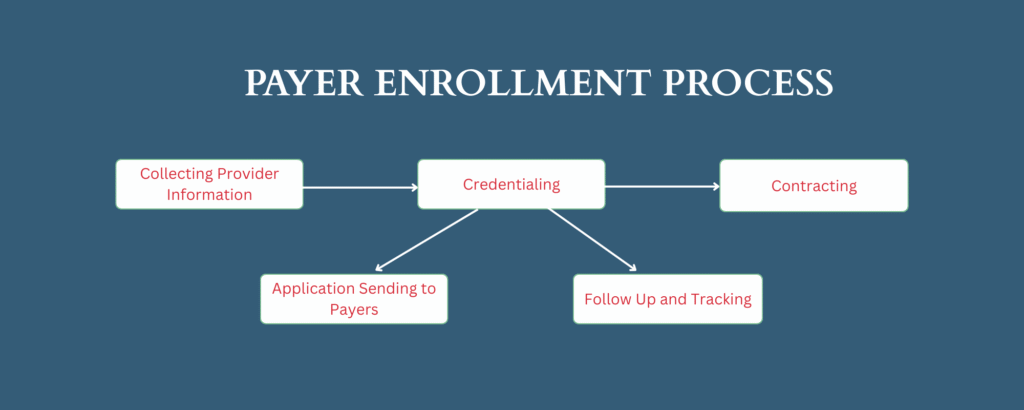
The main steps include:

Data Collection: Collecting all relevant information about the provider, such as licensure, education, work history, and references.
Primary Source Verification: Verifying the provider’s credentials through primary sources like state licensing boards and educational institutions.
Insurance Enrollment: Submitting the required documents and applications to each insurance panel the provider will work with.
Ongoing Maintenance: Regularly updating records and handling re-credentialing, typically every two to three years.

Government programs like Medicare use the Provider Enrollment, Chain, and Ownership System (PECOS) for provider enrollment. The approval process for provider enrollment and credentialing in medical billing is generally faster with Medicare, taking an average of 60-90 days. In contrast, commercial insurance carriers may take anywhere from 90-120 days. As a result, the process involves a cycle of waiting, rushing, and waiting again.

What is the cost of medical credentialing

1. Individual Medical Credentialing

The typical cost per practitioner ranges from $100 to $200, though this can vary depending on the healthcare credentialing service provider. Re-credentialing generally incurs similar costs. Most insurance companies and clinics require re-credentialing every two to three years , although some payers or facilities may require it annually.

2. CAQH- Council for Affordable Quality Healthcare Database

Collecting data from online providers, one viable option is CAQH ProView, offered by the Council for Affordable Quality Healthcare. The initial setup cost typically ranges from $100 to $500.
Management fees depend on the level of involvement of your healthcare credentialing provider and how often the database needs to be updated. Typically, a basic database costs between $50 and $100 per month.
The cost per provider for medical credentialing with five insurance companies may vary up to $ 1500 – $2000 . If your organization works with 20 insurance carriers, the cost per provider would be four times that amount

3. Application Cost

Insurance panel applications typically cost around $100, as stated by the insurer committee. However, in rare instances, this fee could be nearly double the standard amount.

Outsourcing credentialing services provides several advantages.

Time Saving

The credentialing process can be highly time-intensive. By outsourcing it to a third-party service, healthcare organizations can save time and resources, allowing them to focus on their core business functions.

Minimized Errors

Third-party credentialing services employ dedicated staff and advanced technology, helping to minimize the risk of errors and enhance the accuracy of the credentialing process.

Cost Control

Outsourcing credentialing services can be both time- and cost-effective. Third-party providers help reduce the time and expenses associated with the credentialing process.

Access to Expert Knowledge

Third-party credentialing services typically employ experts who are well-versed in the latest standards and best practices.

Factors affecting Credentialing

Provider-Specific Factors
Education and Training: This involves verifying diplomas, residency certificates, and any specialized training the provider has completed.
Licensure and Certifications: It’s crucial to confirm that professional licenses, board certifications, and other required credentials are valid and up-to-date.
Work History and References: Verifying the provider’s past employment, professional references, and any malpractice or disciplinary history is an essential part of the process.
Application Completeness: Submitting a thorough, accurate, and error-free application with all the required supporting documents is critical to avoid delays.

Verification and Data Factors
Primary Source Verification: The speed at which the credentialing body can verify information directly from the original sources (e.g., educational institutions, past employers) significantly impacts the process.
Responsiveness of Entities: Slow responses from institutions, former employers, or other verification sources can considerably delay the process.
Data Accuracy and Completeness: Inaccurate or missing information can lead to requests for additional documentation, extending the timeline.

Organizational Factors
Staff Workload: The number of providers being credentialed and the workload of credentialing staff can impact processing times.
Use of Technology: The efficiency of the organization’s technology and automation tools plays a key role in speeding up and improving the accuracy of the credentialing process.
Relationships with Verification Sources: Strong relationships and well-established processes with verification entities can streamline the verification steps.

External Factors
Payer Requirements: Different insurance payers have unique requirements and application forms, creating administrative complexity for providers and credentialing departments.
Regulatory Compliance: Adhering to state and federal regulations is essential and can add complexity and time to the process.
External Verification Delays: The availability of resources for verification, such as educational institutions or state licensing boards, may vary, potentially leading to delays.

Conclusion

Medical credentialing fees can vary based on factors such as the provider type, the number of payers, and whether the process is handled in-house or outsourced. While these costs may appear significant, they are essential for ensuring compliance and supporting smooth operations within the healthcare sector. By understanding the components of credentialing expenses and implementing cost-saving strategies, providers can navigate this process more effectively and reduce financial strain.

If you need assistance with medical credentialing, consider partnering with a reliable service provider to simplify the process and ensure accuracy. Investing in professional support can save you time, reduce stress, and ultimately increase your practice’s profitability.

Join Our Team

We’re expanding and seeking skilled Coders, Billers, Payment Posters and AR Callers to join the V Serve Healthcare team.

Contact us

We’re Here to Help You!

we understand the critical role medical billing plays in the smooth operation of your practice. Our team is dedicated to providing you with accurate, efficient, and reliable billing services so you can focus on what matters most—caring for your patients.

(646) 912-7444

info@asteroidmedicalbilling.com